
Finding Apple Valley Residents
A search in the Apple Valley residents directory works best when it starts with what you already know. Maybe that is a house number. Maybe it is a name, an old phone listing, or a family link. County property rolls can tie an address to a parcel. Recorded documents can follow transfers over time. State and county systems each handle registration, court, and vital-record questions within their own limits. For earlier households, library shelves, newspapers, and local historical indexes often beat any current portal. Match each source to the narrow fact it can truly confirm. That holds whether you want past residents or want to find who lives on a street in Apple Valley.
- Search a known address or Parcel ID in Dakota County Property Information and save the site address, PID, legal description, and owner field.
- Use the property map to confirm the municipality and see the parcel in context before treating a postal address as an Apple Valley location.
- When an individual registration question is appropriate, enter the required name, date of birth, and location details in MNVotes.
- Move from the parcel's legal description to RecordEASE when a recorded transfer or earlier owner matters.
- For an older household, pair a dated MNHS telephone-directory entry with DCHS, newspaper, census, or cemetery research.
Apple Valley Records Offices
Apple Valley sits in Dakota County. City, county, and state offices split the resident-record trail between them. City departments keep municipal filings, permits, cemetery materials, police records, and meeting archives. The county holds property, recording, court, election, GIS, and many vital-service channels. State systems supply the voter lookup, the court access framework, and vital-record rules. The Western Service Center is often the local starting point. The actual record custodian may sit in a different department.
Dakota County Property Records
County recording and property channels
Recorder counter details should be confirmed before travel.
651-438-4576
Dakota County GIS
Western Service Center, third floor
14955 Galaxie Avenue, Apple Valley, MN 55124
952-891-7081
Dakota County Elections
1590 Highway 55, Suite 2300
Hastings, MN 55033
651-438-4305
Apple Valley Parcel Starting Point
The free Dakota County Property Information search takes an address. It also accepts a Parcel ID, often called a PID. Even part of a house number and street can return candidate parcels. Selecting one parcel opens Property Information, Tax Information, and Building Information panels that separate the data. The property panel can show owner, owner address, municipality, tax description, school district, and watershed. Tax and building panels carry different facts, such as assessments or building characteristics.
A parcel is a defined piece of land in the tax system. Its site address fixes the parcel's location. The owner mailing address is where tax correspondence goes. It can be somewhere else entirely. Record both fields. Just never treat the owner mailing address as proof of residence. The property record remains a strong first key for an Apple Valley address search. Its PID and legal description carry over into maps, plats, and recorded instruments at the recorder and assessor.
| Property Information field | How it works |
|---|---|
| Parcel ID / PID | Enter the 12-character ID with or without dashes. |
| Address / street | Use a full or partial house number and street to find candidate parcels. |
| Property, Tax, Building panels | Open the record categories after selecting a parcel. |
| Property Details | Creates a printable PDF and can link to tax or plat material. |
Note: Pending new parcels can be incomplete, so compare the result date and the county map before relying on a new record.
Apple Valley Voter Status
MNVotes checks one person's registration status rather than browsing all Apple Valley residents. It asks for first and last name, date of birth, and a ZIP code directory path or a county path. The county path needs city or township, house number, street, and an optional unit. Minnesota says the lookup updates nightly. Election officials may take up to 14 days to process a registration or change. A no-match can stem from a spelling slip. It can also stem from a move, a processing delay, or an address-protection rule.
Minnesota's public voter-list law is narrower than a neighborhood directory. A qualifying voter requesting a copy must show identification. That voter must also sign a statement of allowed election, political, or law-enforcement purpose. The list is not for internet publication or unrestricted searchable reuse. Exact dates of birth, identification numbers, and private party-choice data are not public list fields. Those boundaries matter more than any result count.
Apple Valley Resident Rolls Today
No city-issued list of every household exists. Instead, today's directory-like records attach people to a specific public purpose. The county property search names tax owners. Recorded documents identify parties to a transaction. MNVotes returns an individual status when all required fields are supplied, and court and vital systems follow their own access rules. An Apple Valley residents directory search stays most reliable when each finding is labeled with its record type and date.
| Resident record | Person connection | Custodian | Access route |
|---|---|---|---|
| Property Information | Tax owner and mailing address | Dakota County | Free address or PID search |
| RecordEASE | Grantors, grantees, and instrument parties | Dakota County | Account, subscription, or county copy route |
| MNVotes | Individual registration status | Minnesota Secretary of State | Required identity and address fields |
| MCRO | Public court parties and case events | Minnesota Judicial Branch | Remote index or courthouse terminal |
| MNHS telephone books | Historical printed subscribers | Minnesota Historical Society | Finding aid, reading room, or research request |
Property and court records can share a name without proving one current address. To verify a person across several official systems, use the separate Apple Valley resident lookup method and keep each record's role visible.
Apple Valley Deed Trail
Ownership questions belong in the recorded-document chain, not in a property card's guess. Dakota County splits its records into Abstract and Torrens families, both served through the RecordEASE portal. The Abstract computer index reaches back to July 8, 1993, while Book/Page and document-number ranges are digitized subject to missing or incomplete-record notices. Images and online search need an account or subscription. County copies and staff channels remain separate options.
Begin with the current owner, the PID, and the legal description. Search that owner as a grantee. Record the document number, instrument type, recording date, parties, and legal description. Then work backward through each prior grantor. A grantor transfers an interest. A grantee receives one. The chain can link several owner records, but it stays a history of legal instruments rather than a census of who lived at the address.
For a different record family, the Minnesota Secretary of State business-search instructions explain the separate business-name and file-number paths.
The two records answer different questions. A business filing and a deed index serve separate purposes, and a registered office or filing contact is not automatically a home address.
Apple Valley Source Checks
Check each record at its creating office. Dakota County property information serves the parcel and tax-owner relationship. RecordEASE is the recorded-document path. MNVotes handles a controlled registration-status check. MCRO is a court index. Commercial people-finder products combine fragments from many sources, but no single custodian stands behind the blend, and update or correction practices go unexplained. A result earns its weight when it traces to a named custodian and a date.
| Question | Official source | Why the source matters |
|---|---|---|
| Who owns this parcel? | Dakota County Property Information | It identifies the county tax record and parcel keys. |
| When did an interest transfer? | RecordEASE or a county copy route | It identifies instrument parties, recording dates, and legal descriptions. |
| Is an individual registration current? | MNVotes | It applies Minnesota's required fields and privacy rules. |
| Did a historic listing print? | MNHS or DCHS collection | It retains the edition, shelf, row, or archival context. |
One official entry is never a whole profile. The comparison simply keeps an Apple Valley record connected to the reason it exists, the date it was made, and the office that can correct or explain it. That is the discipline.
Apple Valley Vital Paths
Birth, death, and marriage records do not share one open search route. The Minnesota Department of Health keeps birth, death, and fetal-death records. State coverage starts in 1900 for births. Deaths begin in 1908. Both dates depend on the event and record type. A county vital-record office may issue an eligible birth or death record. MDH works through mail or fax and offers no in-person state counter. Eligibility and confidentiality rules still control every certificate.
Marriage runs on a different track. The MOMS service indexes Minnesota marriages and helps locate one. It displays no certificate images. Dakota County issues a marriage certificate only when the license was applied for there. The record is a relationship and date trail. It does not prove either person currently lives in Apple Valley. Older events may call for the county of occurrence, historical collections, or an archive.
The Minnesota Department of Health Vital Records page lays out the official birth and death routes. It includes the eligibility framework that limits certificate access.
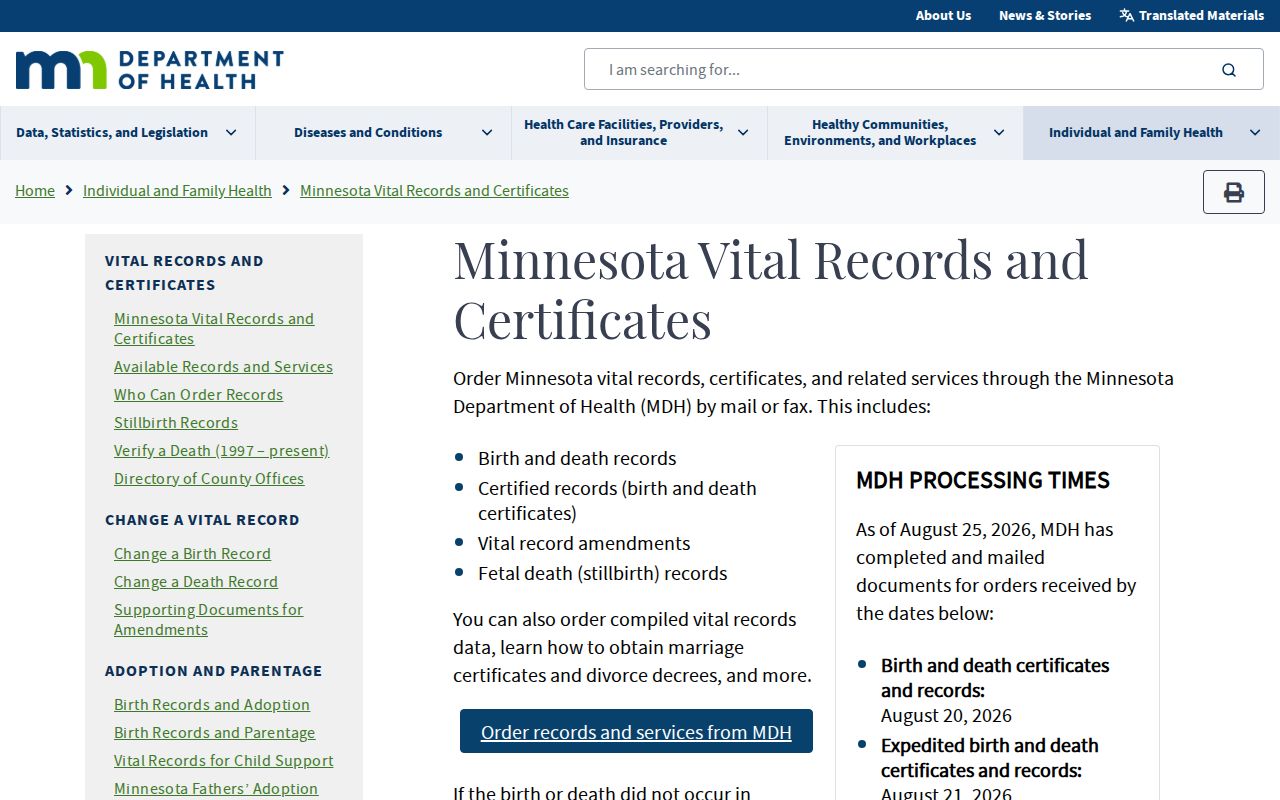
Use the state route first. That order keeps an index, a verification, and a certificate clearly separate from any private summary.
Apple Valley Postal Names
Apple Valley's one postal ZIP is 55124, and the postal names attached to it do not agree. USPS lists Saint Paul as the preferred locality for that code and treats Apple Valley as an accepted alternative. Dakota County, meanwhile, labels its own address points Apple Valley. A lookup that leans on just one label can easily miss an older entry. For county work, confirm the parcel municipality; when the question is really about delivery, USPS address validation settles it.
None of this signals an error on either side. ZIP codes describe delivery geographies, while city limits, precincts, school districts, and old township lines each follow their own borders. The ZIP Code Directory keeps that postal workflow separate, with address-level steps laid out apart from resident records.
Apple Valley Historical Directories
The strongest Apple Valley directory evidence sits with the Minnesota Historical Society. Its Dakota County telephone-directory finding aid opens with a countywide scope in 1928. It lists Apple Valley print and yellow-page holdings from 1969 through 1981. The shelf list is a locator, not a promise. Not every volume is digitized. Not every year holds one edition. A white-page entry usually reflects a printed subscriber or household head, while a yellow-page entry points to a business category.
Search the older locality labels first. The area was Lebanon Township before people voted. In 1968 they incorporated the Town of Lebanon as the Village of Apple Valley. Village administration began in 1969. Statutory-city records begin in 1974. County deeds, courts, vital records, cemetery history, and census materials can all predate the city name, and the full shelf and request options live with the Apple Valley city directory collections.
- Parcel
- A distinct land unit identified for county tax and map purposes.
- Index
- A finding tool that identifies a record or row; it is not necessarily the record image.
- Criss-cross directory
- An address-arranged directory. No verified Apple Valley run was located, so request holdings before assuming one exists.
- Roll
- A dated list created for a defined purpose, such as tax, voter registration, or a historical registration.
Apple Valley Archive Clues
Not every good lead in Apple Valley lives in a modern residents directory. Some sit in a resident lookup. Some of the richest clues sit in archives. The Dakota County Historical Society keeps a 1918 registration index. Each row carries a last name, first name, birthplace, residence, city, age, note, and a microfilm-roll field. The printed index runs 259 pages. That roll number is the practical handoff. You want it when you have a row checked against the original microfilm. DCHS also lends research help. It covers obituaries, marriage announcements, Catholic church records, and other local material.
Lebanon Cemetery adds an older thread to the county residents directory trail. Its earliest recorded burial is May 25, 1861. That predates Apple Valley's municipal formation. The city describes the cemetery as established in 1863. The city publishes history pages and cemetery-code provisions covering lot and grave records. It publishes no official public name-search database, though. For a particular burial or lot question, contact the city or the cemetery custodian. Do not treat a generic online listing as the record.
Apple Valley Future Records
Most records research looks backward. But Dakota County also gives residents a way to watch forward. Its free Property Watch service sends alerts for a name or a legal description. A matching document hits the recorder's rolls. The notice then reports the matched party, the recorded date, the document number, and its type. Common names can trigger extra alerts. An alert is not a fraud finding. So compare it against the county record before acting. Minnesota's license and registration lookup shows a similar boundary at the state level. State tools reveal facts about the records they administer. None of them is a master Apple Valley people list.
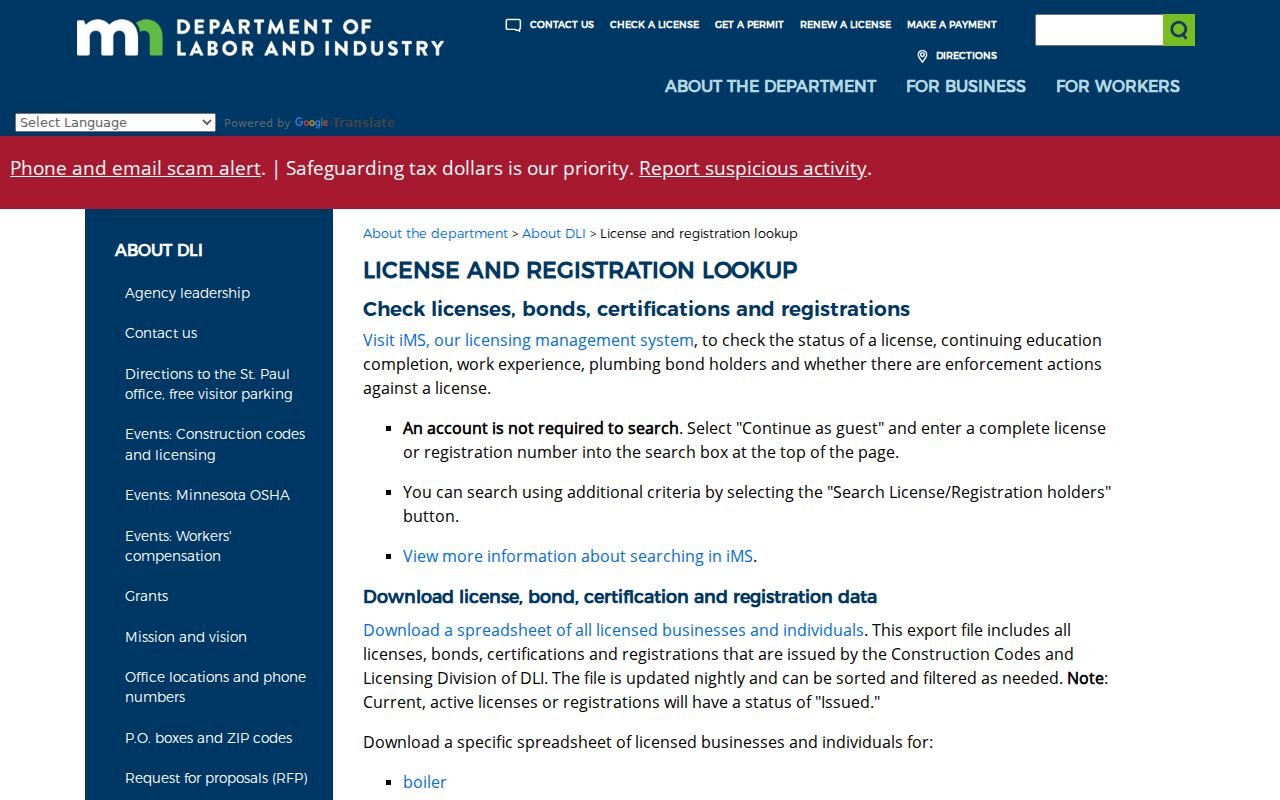
A careful resident lookup labels every source correctly. Call it a property record, a court file, a license entry, a vital record, or a historical index, rather than flattening each result into a claim about where someone lives.