
Sources for Apple Valley Previous Residents
A sound Apple Valley previous residents search moves from the parcel in front of you to the records created at different dates. The free Dakota County property card establishes the current tax and ownership connection. The legal description and Parcel ID then make the recorded-document search more reliable than a street address alone. Telephone books, census schedules, registrations, and newspapers add household clues, but they do not replace the deed trail. Treat each source as a dated observation and keep owner, subscriber, and resident roles separate.
| Source | Years It Covers | Where Held | What It Shows |
|---|---|---|---|
| Dakota County Property Information | Current property-card information | Dakota County Property Information and GIS | PID, site address, legal and tax description, owner and mailing fields |
| RecordEASE Abstract index | Present back to July 8, 1993 | Dakota County recorded-document portal | Recorded-document path, parties, dates, and legal-description links |
| MNHS telephone-directory finding aid | Apple Valley verified entries 1969–1981 | Minnesota Historical Society | Printed subscriber, business, address, and phone details when present |
| DCHS 1918 registration index | 1918 | Dakota County Historical Society | Last and first name, birthplace, age, residence, city, and microfilm roll |
| Federal census schedules | 1850–1950 public range | National Archives and research libraries | Dated household and place details, subject to the census year |
| Dakota County Tribune | 1912 onward | MNHS newspaper route | Notices, obituaries, civic activity, and development context |
Start with the property card for a modern address. Move to RecordEASE for the transfer chain, then use historical sources only after each recorded date gives the correct period to search.
The MNHS research-services route covers directories, newspapers, atlases, manuscripts, and archives that can corroborate the older address trail.
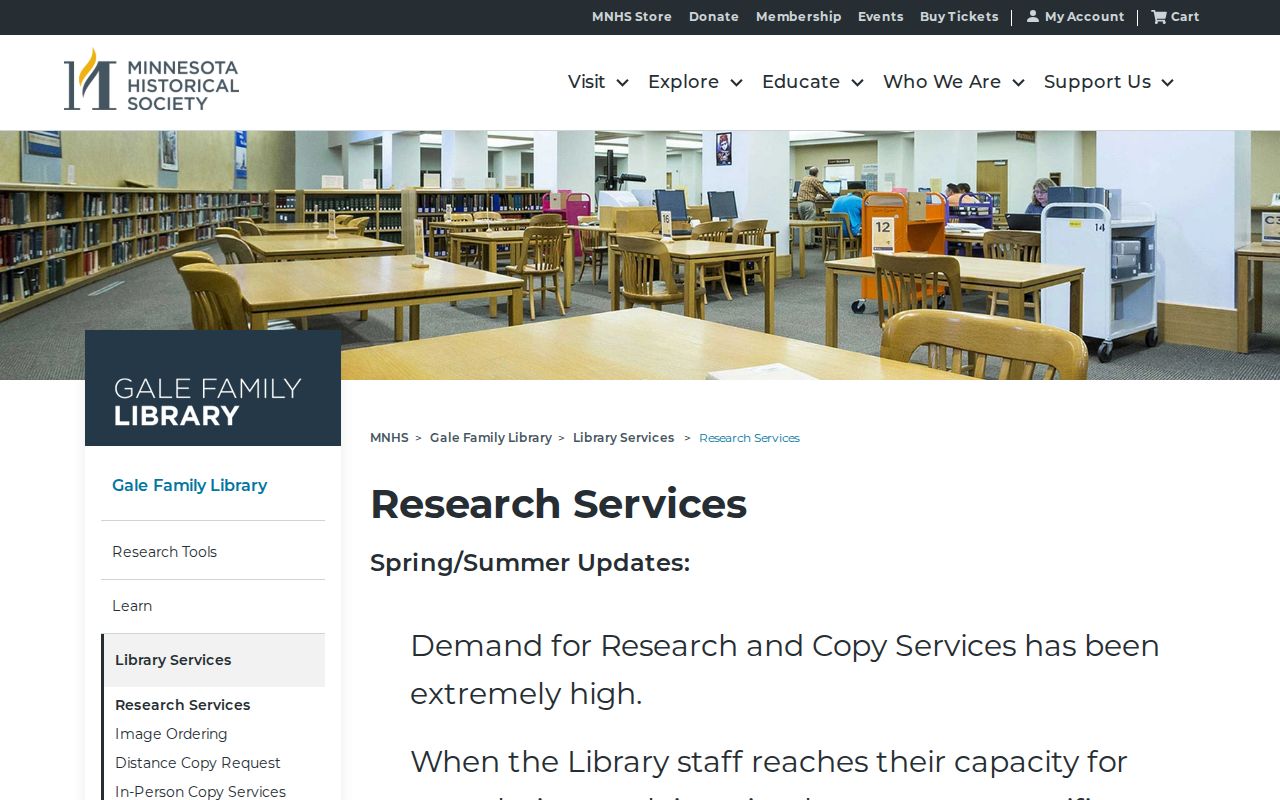
The research-service capture points to several historical formats, so a missing name in one source should lead to a dated cross-check rather than a broad claim about the house.
Apple Valley Parcel Starting Point
Use the free Dakota County Property Information Search before trying to identify past residents. It accepts an address or Parcel ID, and an address may be entered as a full or partial house number and street. The returned card can show the site address, PID or TAXPIN, municipality, tax description, owner name, and owner mailing address. Capture the legal description too. A property card may also show tax information, special assessments, homestead data, building details, printable Property Details, and links to plats.
These fields establish a tax or ownership relationship, not occupancy. A property owner can live elsewhere, use an entity name, own several parcels, or receive tax mail at another address. Likewise, the property’s situs address is where the parcel sits, while a mailing address is where correspondence goes. Do not turn an owner, a directory subscriber, a voter, or a permit applicant into an automatic household member.
The county’s map catalog can add parcel, section, municipal-boundary, and plat context. The 2023 Dakota County Plat Book is listed at $44 and shows parcel boundaries, acreage, ownership, section lines, and municipal boundaries; card payments add a 2.49% fee. This is useful when a subdivision-era address must be connected to a lot, block, or section description.
Note: The current property card is the key to a record trail, but it is not a list of everyone who has lived at the address.
Trace Apple Valley Deed History
RecordEASE is Dakota County’s recorded-document portal. It separates Abstract and Torrens records and requires an account or subscription. For the Abstract side, the online index reaches from the present back to July 8, 1993. Book, page, and document-number ranges are digitized, but the county warns that older or incomplete records can require notice to the county. The public property card is free; recorded-document access, images, copies, and certification follow the portal or county fee routes. Do not describe a post-login field or an image as free when the inspected landing page does not support that claim.
Begin with the legal description and current grantee, then work backward. A grantee is the party receiving an interest in a document; a grantor is the party conveying it. Record the same fields at every step so that the next search rests on the instrument rather than a vague name match.
- Open the current property card and preserve the PID, site address, current grantee or owner, and legal description.
- In RecordEASE, locate the current owner’s purchase as grantee and obtain the recorded-document details through the available portal or county copy route.
- Record the document number, recorded date, instrument type, legal description, book and page or tract reference, and the grantor and grantee.
- Search the prior grantor as a grantee, then compare the legal description before adding the earlier transfer to the chain.
- Repeat backward. For older gaps, contact the county because the online Abstract index does not reach before July 8, 1993.
- Legal description
- The lot, block, plat, section, or other land description used to identify a parcel beyond its current street address.
- Chain of title
- A linked sequence of recorded transfers that follows an interest in the same property backward.
- Abstract property
- A property record path followed through the legal description and successive recorded instruments.
- Torrens property
- A registered-land path followed through a certificate-of-title number and its memorials.
Apple Valley RecordEASE Index Boundary
The July 8, 1993 Abstract-index boundary is a practical dividing line for Apple Valley previous residents research. A modern parcel can have a long history that is not fully visible through a simple online name search. When the next transfer predates the online index, take the PID, legal description, known party names, document references, and date range to Dakota County. Property Records lists 651-438-4576 and records@co.dakota.mn.us. The county also identifies the Western Service Center GIS terminals as an in-person parcel and map fallback, while its published recorder-counter location and hours should be confirmed before travel.
A Chapter 13 public-data request is another route for existing public records or record-retention descriptions. Minnesota’s Government Data Practices Act presumes government data public unless classified otherwise. A request should identify the record sought, date range, address or PID, the known custodian, and whether inspection, copies, or both are wanted. The county says inspection is free, while copies and research can carry charges. A request cannot require the county to create a new past-resident list.
Apple Valley Past Household Records
Deeds establish transfers, not a complete household list. The historical household layer starts with the MNHS telephone-directory finding aid, which has verified Apple Valley print and yellow-page entries from 1969 through 1981. The collection begins in 1928, but that larger county collection is not an Apple Valley run for every year. White pages can show a printed subscriber, address, and telephone number; yellow pages can show a business classification. Heads of household are usually listed, minors are excluded, and women may appear only as independent entries.
No verified Apple Valley reverse or criss-cross run was located, so do not assume an address-order volume exists. The collection details and request procedure are handled on the Apple Valley city directory page. In a past-household search, the relevant question is narrower: does a dated edition print the name or address being tested? A listed name is not proof that every occupant lived there, and an absent name does not prove the house was empty.
- Use the deed date to select a directory year near the transfer or household event.
- Search the verified telephone-directory item by name and record the printed address and edition details.
- Compare that observation with a census schedule for the period, using the historic jurisdiction if needed.
- Use a newspaper notice, church record, obituary, or county record to test a move, death, or family connection.
Apple Valley Previous Residents Census
National Archives census records are released after 72 years, placing the current public range at 1850 through 1950. Depending on the census year, schedules can show names, ages, birthplace, immigration or citizenship information, street address, marriage details, occupation, and home value. These are household snapshots, not a continuous address directory. The 1890 census was mostly destroyed after a Commerce Department fire, so a previous-residents trail must bridge that gap with other documentation.
For early Apple Valley history, search Lebanon Township, Town of Lebanon, Village of Apple Valley, and City of Apple Valley. The area was Lebanon Township before the 1968 incorporation vote; village officials began January 1, 1969, and statutory-city records began January 1, 1974. Rural free delivery dates from 1903 on the DCHS history map also suggest that older entries may use route or locality language rather than a current street number. The legal description and a plat can be more durable than the address.
Note: Census evidence dates a household to one enumeration, while a deed dates a transfer and a directory documents only its printed entry.
Apple Valley 1918 Registration Pages
The DCHS 1918 registration index is a useful numerical clue for a prior-resident investigation. It has 259 visible pages, and its result fields include last name, first name, birthplace, age, residence, city, and microfilm roll. Record the roll number rather than treating an index row as the whole record. The entry can guide a follow-up through the historical society’s microfilm or broader research service.
DCHS maintains print, microfilm, and online archives and describes more than half a million church, cemetery, and census-related records. Its research service can help with obituaries, marriage announcements, Catholic church material, and other local sources for a listed donation-based rate of $15 per half hour. That route can provide a dated family event where property and directory records are thin.
Apple Valley Previous Resident Context
The Dakota County Tribune access route supplies issue-based context for a previous-residents trail. The paper began in Farmington in February 1912, later served Burnsville, and continues publication. Gale Family Library in St. Paul is the MNHS route cited for access. Search names, street names, churches, school activities, obituaries, public notices, and subdivision or development terms. Then verify any promising result against the issue image because the Minnesota Digital Newspaper Hub does not include every title or year online.
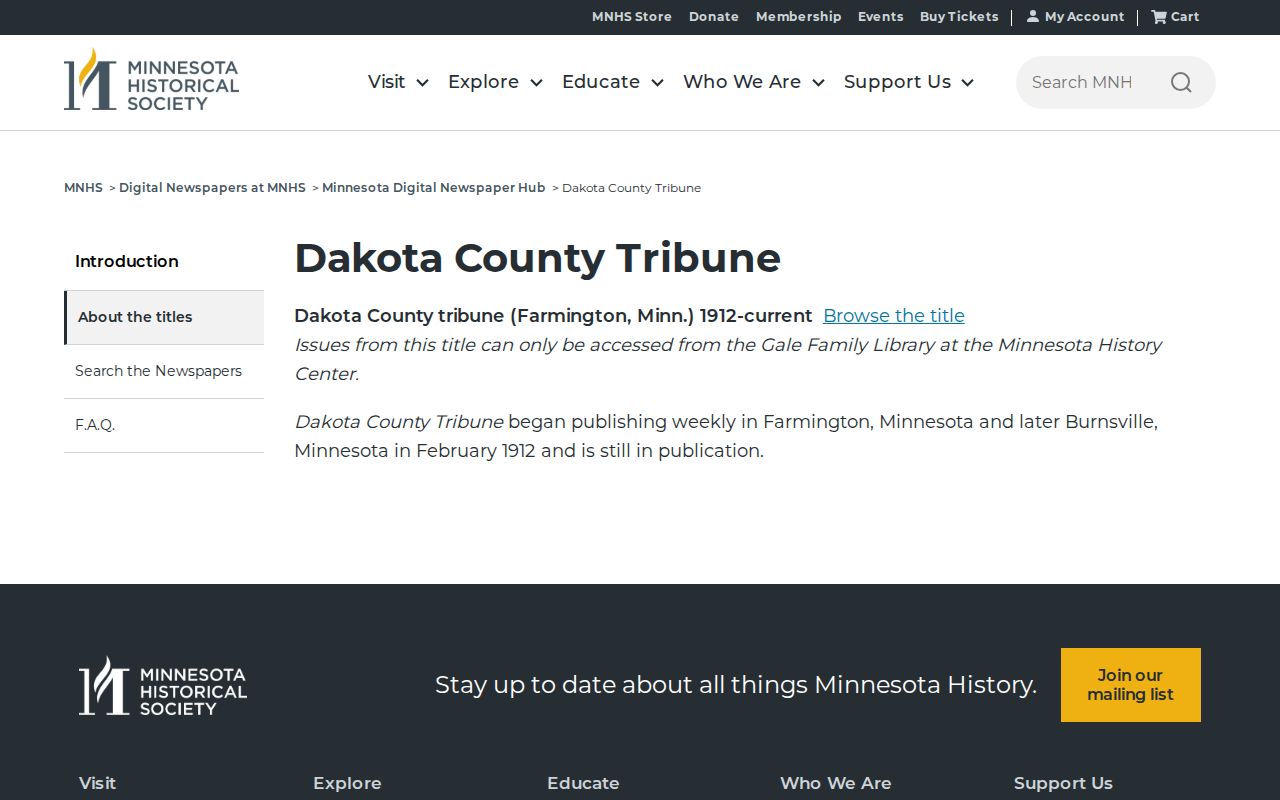
The newspaper capture reinforces the need to follow the issue and year, particularly when an address was part of the Thompson subdivision growth from 1962 through 1965 or the wider 1968 expansion period.
Apple Valley’s municipal record trail starts later than its people records. The city archive includes a 1969 Village minutes item, while Lebanon Cemetery’s earliest recorded burial is May 25, 1861. This gap between local settlement history and city terminology is why an older name or address should be searched under Lebanon as well as Apple Valley.
Apple Valley Previous Resident Limits
Some tempting shortcuts are not supported by the verified sources. No official Apple Valley citywide street-renumbering or street-renaming conversion table was located, so do not invent a conversion when a modern address fails. No official Apple Valley Sanborn sheet was found. No public cemetery name search was verified, either. Contact the relevant custodian for cemetery or historical records instead of treating an absent web result as a complete negative.
The property portal also has limits. Its owner, mailing, tax, and building fields are not occupancy records, and new parcels may be incomplete. RecordEASE separates title and instrument paths but does not turn older incomplete material into a fully online chain. Keep the document number, date, parties, legal description, and source image or copy with every finding. That record of how a name connects to the address is more useful than a single unverified list of previous residents.