
Apple Valley Resident Lookup Sources
Different Apple Valley records answer different questions. The free Dakota County Property Information Search ties an address or parcel ID to an owner, mailing address, tax description, and parcel details. It does not establish who currently lives at the site. MNVotes is an individual registration-status tool, not a public household browser. The statewide court index and vital-record channels add case or event context when access rules permit it. Keeping those roles separate prevents a name match from becoming a claim about a current Apple Valley resident.
| Record | What It Confirms | Where | Access |
|---|---|---|---|
| Property card | Owner, parcel, tax, and mailing relationship | Dakota County Property Information | Free address or PID search |
| Registration status | Status for the entered individual | MNVotes | Name, birth date, and address inputs required |
| Trial-court index | Public case parties, dates, and procedural status | MCRO and Dakota County District Court | Remote access varies; terminals and clerk routes remain |
| Marriage or vital route | Marriage index locator or eligible certificate and verification path | MOMS, Dakota County, and MDH | Index and certificate access differ |
| Historic identity source | Presence in a dated historical record | DCHS and Minnesota Historical Society collections | Historical context only |
Begin with the known name, address, or event. An ownership question belongs with the parcel card. A current registration question belongs with MNVotes. A public case question belongs with MCRO. A relationship or life-event question may require the MOMS index, an MDH application, or the county that issued a marriage license. Each route has its own access channel and its own reason a result may be absent.
Apple Valley Name and Place
Build a small search key before opening a portal: the spelling used at the time, former or alternate names, an approximate age or date of birth, a known address, and the relevant year. Apple Valley’s earlier records may use Lebanon Township, Town of Lebanon, Village of Apple Valley, or a Saint Paul postal locality. Those labels describe different historical or delivery contexts, not competing identities. A court case may use a legal name while a telephone directory uses a subscriber name.
The property portal is a useful first check when an address is known. Search by full or partial house number and street, or by the 12-character PID with or without dashes. Record the site address, municipality, PID, legal description, and owner field. Then keep the owner mailing address separate from the site address. That distinction matters because an owner can be an entity, can own several parcels, or can receive tax mail elsewhere.
Apple Valley MCRO Resident Lookup
Minnesota Court Records Online, or MCRO, is a statewide trial-court index rather than an Apple Valley resident list. Narrow a name search to Dakota County where the interface offers that choice. Use the result to compare the case number, party role, case type, filing date, hearing or docket activity, disposition, and whether a document is available. A charge, filing, or name match is not a finding about a person, and it is never proof of a current address.
| MCRO tab | Search inputs captured in research |
|---|---|
| Case Search | Person or business name, case number, citation number, attorney name, or attorney bar number |
| Document Search | Case number |
| Hearing Search | Person or business name, case number, judicial officer, attorney name, or attorney bar number |
| Judgment Search | Debtor name |
A public result can inventory the party or business name and role, case number and type, filing or open date, court location, hearing details, document title and filed date, and disposition or status when shown. Remote documents have real limits. MCRO describes broader remote availability for specified criminal and civil materials on or after July 1, 2015, while Family and post-adjudication Paternity access is limited to orders, opinions, and notices. Sealed, confidential, excluded, and some older material may not appear. A missing result does not establish that no record exists.
For a public matter that is not available remotely, use the Dakota County District Court clerk or a courthouse public-access terminal. The Western Service Center court location is at 14955 Galaxie Avenue W in Apple Valley, with phone 952-247-7099. Public terminals may show public material unavailable online, but restricted material stays restricted. Confirm current terminal hours before going. Plain court copies are listed as free, certified copies as $14, and certified plus exemplified copies as $28 on the inspected court fee information; recheck the live schedule before ordering.
Apple Valley Voter Status Check
MNVotes requires a first name, last name, date of birth, and either ZIP or county search details, then city or township, house number, street, and a unit when applicable. It updates nightly, though the state says officials may take up to 14 days to process a registration or change. The resulting status is for the entered individual. It is not an open list of everyone at an address, and a no-match can reflect a spelling difference, move, processing time, protection, or another eligibility issue.
The official MNVotes registration lookup shows the required name, date-of-birth, ZIP or county, city, house, street, and unit path.
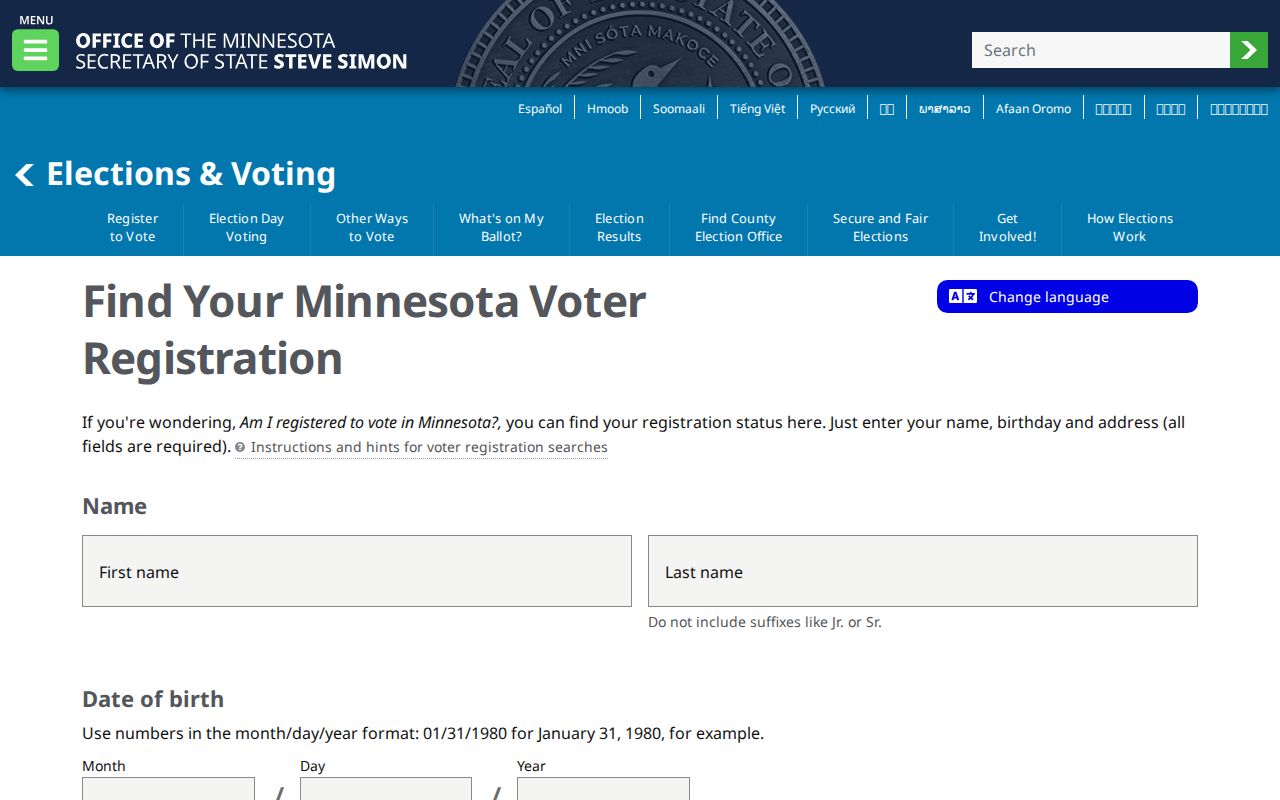
Use those fields only to check the individual status the state designed the tool to return. Minnesota’s public voter-list rules also limit who can obtain a copy, require identification and a lawful-use statement from a qualifying registered voter, and bar publication of the list as a searchable internet roster.
Apple Valley Vital Record Routes
The Minnesota Official Marriage System, known as MOMS, is a marriage index. It can search participating counties including Dakota by applicant names, county, dates, and name-match option, then return county, certificate number, marriage date, applicant names, and a request-copy route. It does not provide a certificate image. For a Dakota County marriage certificate, use the county application only when the license was applied for in Dakota County. The inspected county fee is $9 per copy.
Minnesota Department of Health Vital Records holds births from 1900 to the present and deaths from 1908 to the present at the state level. Those ranges do not promise that every Apple Valley event has the same online status. Eligibility and tangible-interest rules control birth and death certificates, including confidential records. MDH accepts mail or fax requests but not emailed applications or electronic certificate delivery; an authorized Minnesota county office can be another route for eligible requests. A birth verification confirms listed identity facts and is not a birth certificate.
Note: A marriage index, certificate, birth verification, and death record each carry a different purpose, access rule, and level of proof.
Apple Valley Historical Identity Trail
For a former Apple Valley resident, date the source before drawing a conclusion. The Dakota County Historical Society’s 1918 registration index searches last name, first name, and birthplace. Its results can show a middle name, age, birthplace, residence, city, note, and microfilm roll number. The web index displayed 259 pages when inspected. That unusually useful roll pointer makes a follow-up request more precise, but a historical residence entry is not a present address.
Telephone directories, newspapers, census material, deed chains, and cemetery records can add a second dated observation. Apple Valley’s city history began after the Lebanon Township period, so an old search may need Lebanon Township, Town of Lebanon, or Village of Apple Valley. The time label should stay beside every record. A directory entry may identify a subscriber or household head, while a deed records a transfer and a court docket records a case event.
Verify an Apple Valley Resident
Verification means testing one narrow fact across sources that serve different purposes. Anchor a name to a lawful, relevant place or event first. Then compare dates and identifiers instead of simply counting matching names. The following sequence avoids treating a property owner, court party, or historical directory entry as the same thing as a current resident.
- Use the Dakota County property card to capture the PID, legal description, site address, and owner relationship. Keep mailing and site addresses distinct.
- When a civic-status question is appropriate, enter the individual’s required information in MNVotes and retain the result date because processing can lag.
- Search MCRO with the right tab, then compare Dakota County, case number, party role, case type, and filing date before relying on a name match.
- Use MOMS or an eligible MDH or county vital-record route for a relationship or event question. Request a copy only from the custodian and only when the access rule is met.
- Docket
- A court’s running record of case events, such as filings, hearings, orders, and status entries.
- Index and image
- An index points to a record and often supplies basic fields. An image is the underlying document and may be limited, fee-based, or restricted.
- Certified copy
- A copy issued by the custodian with official certification. It is different from an online index result or an ordinary printout.
Apple Valley Resident Lookup Limits
Minnesota public access is record-specific. Under the Minnesota Government Data Practices Act, Chapter 13, public data can be inspected without charge and copied for a fee, but another law can make a field private or confidential. Safe at Home assigns protected participants a substitute address and mail-forwarding path. Confidential vital records, voter withholding, sealed court files, and expunged records also set boundaries. Do not try to infer or rebuild a protected address from fragments in another record.
Current status matters. In a March 11, 2026 notice, the BCA said records for 595 people had been temporarily visible on its public criminal-history site when recent court activity was not recognized; the issue was corrected February 25, 2026. That notice is a reminder to check a result’s current legal status and not infer that a record is complete, permanent, or absent. Arrests and charges are not convictions.
Apple Valley Public-Record Corrections
When a record appears wrong, contact the custodian that owns it: Property Records for a parcel field, court administration for a court file, elections officials for registration matters, or the appropriate vital-record office for a certificate or verification route. A narrow Dakota County data-practices request should identify the existing record, date range, address, PID, or case number, state whether inspection or a copy is wanted, and include delivery contact details. It should not ask an agency to assemble sensitive material across unrelated systems.
The same approach works when an online portal ends at a summary. Dakota County offers office, terminal, phone, copy, and written-request channels. Historical questions can move to DCHS, Minnesota Historical Society collections, or microfilm after the date and locality are clear. For address-by-address work after the person question becomes a street question, the Apple Valley street directory has the separate parcel workflow.